
Ntando Ngcapu is a Jazz pianist, composer, arranger, music consultant, visual artist and educator. He was born and raised in Soweto, Johannesburg. The environment he grew up in was quite distant from many of the things he eventually pursued professionally. “Much of my influence came from within my home rather than my broader surroundings”, he told Jazz It Out.
He considers himself a progressive artist. “The same questions I ask in my artistic practice are the same questions I ask in my life”, he said. His work is rooted in curiosity, reflection and a constant search for understanding. “Whether I am creating music, visual art or engaging in education, I am always exploring what it means to be human and how we relate to the world around us”, he added.
His father was a music enthusiast, while his mother came from the Seventh-Day Adventist Church, where music and singing formed an important part of community life. It was through that environment that he first learned to sing. “My visual art influences came largely from my mother’s side of the family. She loved drawing, and I would spend hours copying her work”, he said. She inherited that artistic inclination from her own mother.

Ntando Ngcapu. Picture supplied
Music in his household was almost ritualistic because of church. Yet, surprisingly, he did not enjoy music as a youngster. “I found drawing much easier and more natural. Sound functioned more as a tool for concentration than something I considered as an artwork”, he recalls. He only realised as time went on that he was already engaging deeply with sound, in a different way. As he matured, music gradually became the primary vehicle through which he expressed himself and made sense of the world.
Ntando would later discover that there were musicians within his extended family, some active in the Jazz scene. He also learned that his grandmother had played piano long before he was born. “However, my father was the first person to formally introduce me to music. He had started a music school himself but was unable to continue running it”, he said. Instead, he enrolled Ntando at a music school run by a friend who was more active in the field. His father was also the first person to show him how to play a scale on the piano.
Two memories of what happened at primary school stand out as they shaped the creative he is today. “The first was playing a recorder in front of my classmates. The second was winning a local art competition in Grade 4”, he recalls. Looking back, those two incidents speak directly about the person he would become, an artist working across both music and visual art.
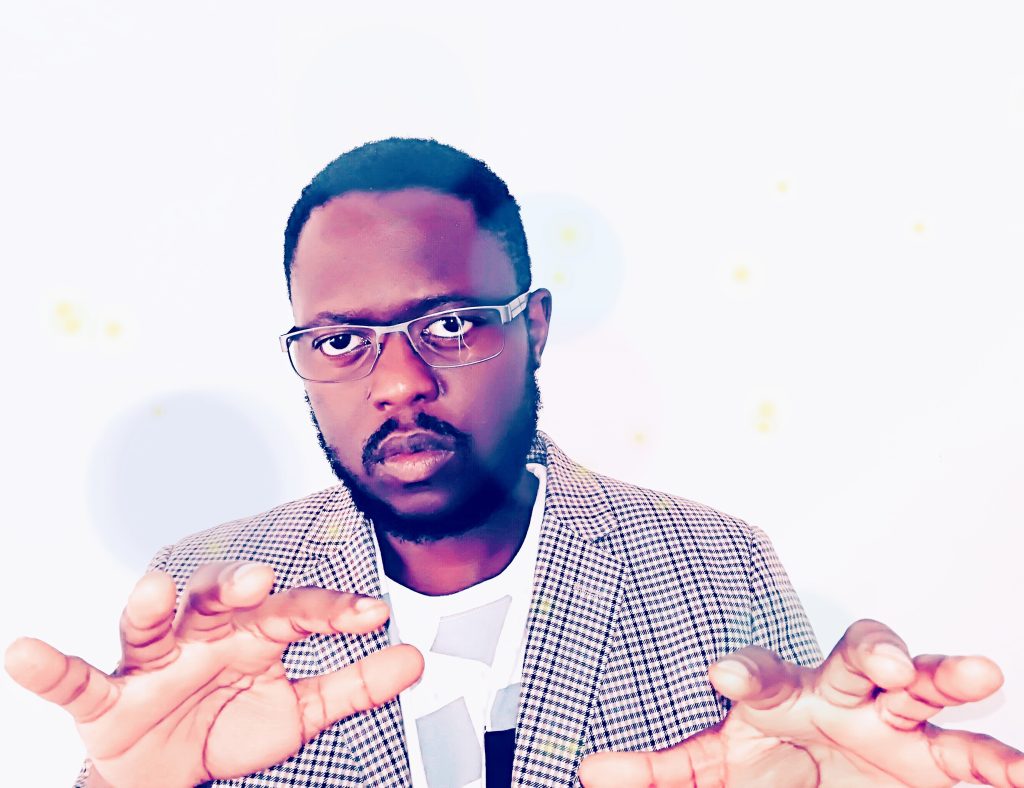
As a high school learner, he did not have a long list of musical heroes. He was initially drawn more to sounds than individual artists. House music was among the first genres that captured his attention. Artists such as DJ Fresh, TKZee, Oskido and groups like Durban’s Finest were accessible and exciting. Everything changed when he attended the National School of the Arts. One day, friends introduced him to Moses Molelekwa’s song “Mountain Shade”. It was the first Jazz composition he listened to attentively, and it completely altered his music trajectory. Suddenly, he found himself asking “What is thing called Jazz?”
From there, he began exploring the work of musicians such as Themba Mkhize, Bheki Mseleku, Chick Corea, Horace Silver (especially his compositions) and Mulgrew Miller. “Hearing Mulgrew Miller was especially transformative. It was the moment I fully accepted that Jazz piano was the path I wanted to pursue”, he said. Music became a place of comfort during his teenage years. He regards that stage as very critical in one’s life as it includes taking decisions that may shape their future.
Amid all that uncertainty, sitting behind a piano brought sense of calm and clarity. It changed how he felt and approached every aspect of life. At the same time, Ntando admired friends who were already performing professionally. They gave him a glimpse of what life as a musician could look like. In visual art, however, he often felt disconnected because they were rarely exposed to successful artists whose careers they could aspire to. Music, by contrast, gave him living examples of possibility.
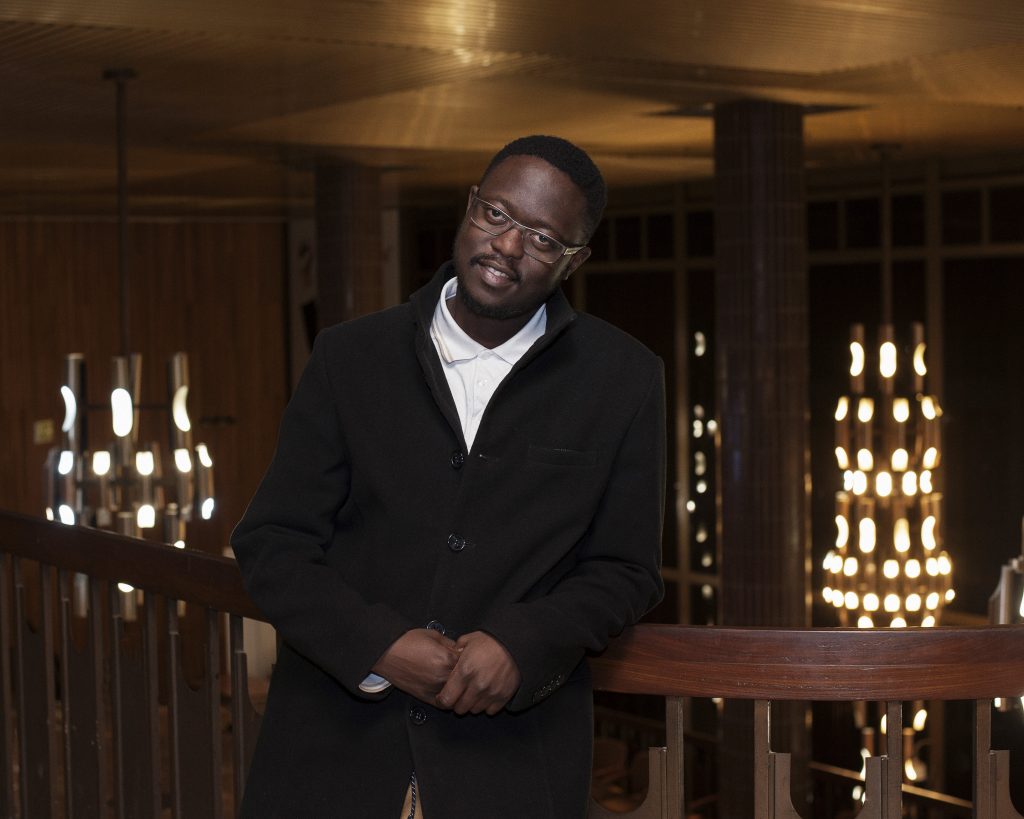
Even in silence, he often hear music. Picture supplied
Soweto Youth Music Development played a major role in nurturing his talent. “My father enrolled me at their programme which was built on the idea of making music education affordable and accessible to township youth”, he said. More importantly, it created a productive and inspiring environment that kept many young people engaged in meaningful activities, exposed them to performances, musicians and opportunities they probably would not have encountered, citing attending weekly Johannesburg Philharmonic Orchestra concerts at Linder Auditorium as an example.
After matriculating, Ntando attended programmes at Berklee College of Music through a scholarship opportunity. While attending, he received encouragement to continue developing his studies in South Africa because the foundation he needed was already available to him. “Upon my return, I enrolled at Tshwane University of Technology (TUT), where I pursued my formal music studies. I have always remained a student at heart”, he said. Over the years, he continued engaging with Berklee through specialised courses, particularly in game audio and sound design.
Ntando considers himself fortunate because meaningful performance opportunities arrived quite early in his career. “One particularly important milestone was participating in a tribute concert for Abdullah Ibrahim. Being on that stage was transformative”, he remembers. He was also mentored by the legendary Khaya Mahlangu, whose guidance played an enormous role in his development as a young musician. “His mentorship not only shaped my artistic growth but also helped position me for opportunities such as my Berklee scholarship”, he added.
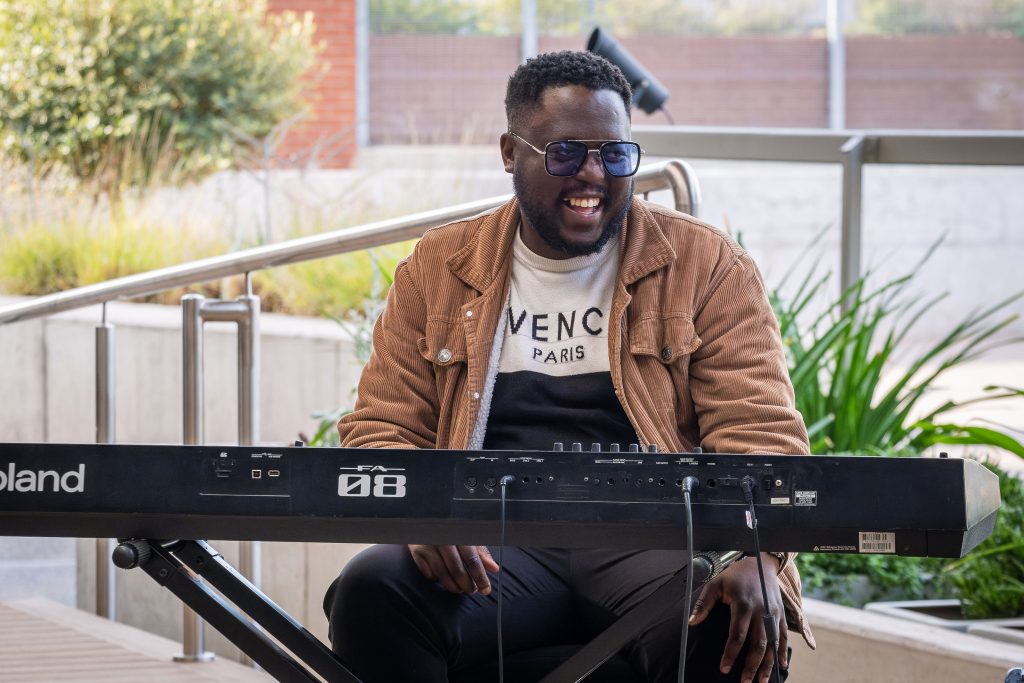
An instrument that has seen him travelling across the globe. Picture supplied
His music adeptly blends South African heritage with international influences, creating a distinctive musical voice that resonates across diverse audiences. “My music is a reaction to what I feel, what I experience and, at times, even to the silence around me”, he said. Through his live performances, educational initiatives and consulting roles, he continues to make significant contributions to the Jazz world.
Through his trio, he has played original music locally and internationally in Jazz clubs such as Miles, Nikis Oasis, and The Observant. He is also bandleader of a 7 piece ensemble called The Crayons, which was formed in 2018, performing in spaces such as U-Space, The Orbit, Javett Art Centre, and recording works used in IT HAS TO BE JAZZ. Ntando also collaborated as a pianist and visual artist on the Sankofa project, which its influenced by the Grammy winning drummer, Marcus Gilmore in Cape Town. It incorporates the 5 senses with performing arts, including motion, to create a new multi-disciplinary performance.
Ntando has recorded some of his compositions, but is yet to release a full body of work that truly reflects his vision. “Part of that is perfectionism, but also about wanting every aspect of the project to align with the artistic statement I wish to make”, he said. From the personnel involved in the sound design, sonic textures and visual presentation, he wants every detail to contribute meaningfully to the overall experience. As someone who is interested in sound design, he is fascinated by creating immersive soundscapes that extend beyond traditional Jazz recording practices.
Through performing at festivals, both locally and internationally, he has always been about cultural exchange. He has come to realize that every audience brings its own perspective, history and relationship to music. “When I performed in India, I encountered musicians and audiences whose musical traditions are rooted in centuries-old systems and highly sophisticated concepts. Engaging with those traditions expanded my own thinking and challenged me to listen differently”, he explained.
Ntando remembers how he struggled to create a balance between music and visual arts until someone told him to “just do it”. He realized that visual arts presents everything at one, while music unfolds over time. That idea became central to his artistic process. “Many of my artworks are layered digital collages”, he said. At first glance, viewers may think they are looking at paintings, but a closer inspection reveals multiple textures, images and visual fragments assembled together. As viewers spend more time with the work, new stories and meanings emerge.
“This mirrors how I feel about music. The deeper one listens, the more layers reveal themselves”, he said. Much of his visual work explores identity, memory, lineage and the lived experience of growing up in Soweto. Those same themes also appear throughout his music. He sees himself continuing to develop these ideas and bringing them together. In the coming years, he hopes to emerge more fully as a recording artist while continuing his work in education, research and cultural dialogue.
He enjoys travelling, swimming and playing pool. Travelling in particular, has become one of his greatest passions because it allows him to experience different ways of living and thinking. Although many people know him through his achievements as a pianist, including winning the SAMRO Overseas Scholarship and being runner-up in the UNISA Piano Competition, visual art remains his first creative language. “I started drawing when I was two years old, long before I even touched a piano”, he concluded. His Facebook account is Ntando Ngcapu. Follow him on Instagram @ntandoscrayonbox and subscribe to his YouTube channel @ntandoscrayonbox.

0 thoughts on “Ntando Ngcapu considers himself a progressive artist”
Comments are closed.