
Victoria Busisiwe Mhlongo, popularly known as Busi Mhlongo, was a singer, dancer, and composer who was born in Inanda, North of Durban, on 28 October 1947. She started singing in groups led by her older brother at an early age. Even though she could see how talented her daughter was, Busi’s mother insisted that she first finish school before considering music as a career. What many were not aware of was that Busi would secretly go the YMCA for evening practices.
She took part in many musicals such as “Manana, The Jazz Prophet”, a play by Gibson Kente, first performed in 1963. In 1967, she married drummer Early Mabuza and their daughter Nompumelelo, affectionately known as Mpumi was born. In 1972, she moved to London and sang with Afro-Jazz band Osibisa, a Ghanaian Afro-Rock ensemble. While residing in London, she recorded with other South African exiles including Dudu Pukwana, Julian Bahula, and Lucky Ranku.
In 1985, Busi returned to Africa during an African tour in Zambia and Lesotho with singer Letta Mbulu. She also retuned to Johannesburg and Durban with African American bassist Steve Neil. By now an artist who had been exposed to international audiences, she formed the original Twasa Band with the late Doc Mthalane. She played with Twasa and Mankunku Ngozi in sold out performances at The Blue Note in Durban. At her performance in Ulundi, she met and befriended umakhweyana queen, Princes Magogo.
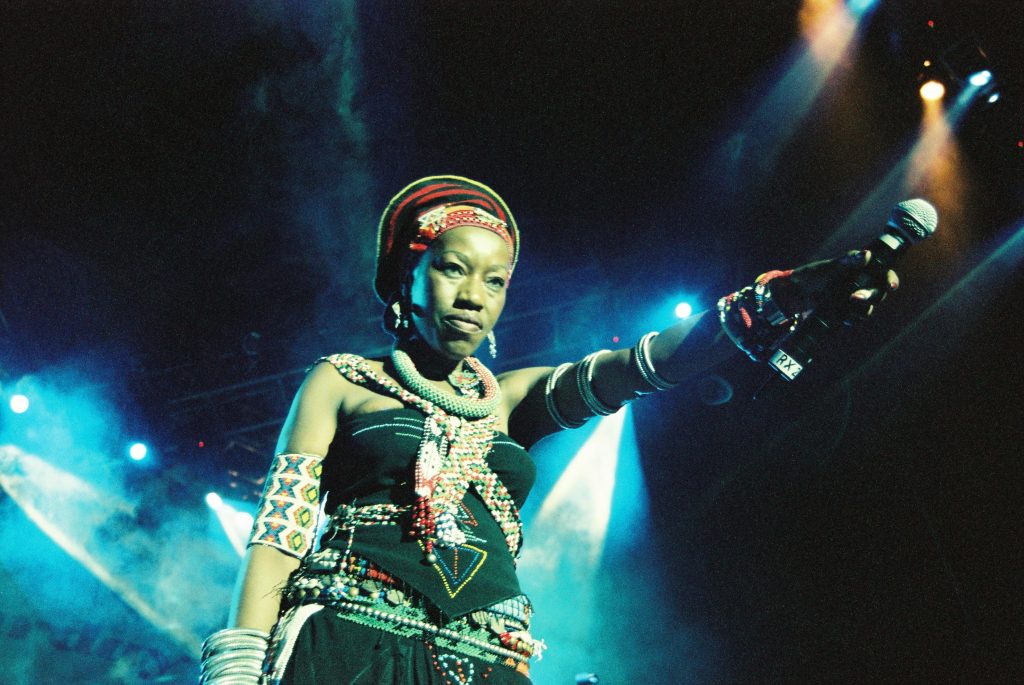
Busi Mhlongo. Picture supplied
The album “Babhemu” by Busi Mhlongo and Twasa was released in 1993 with Munich Records. This release was followed by tours in Holland as part of its promotion the following year. It was reissued in Holland and Belgium. “Urban Zulu” is undoubtedly her most highly acclaimed album that was originally released with MELT 2000 in 1998, with subsequent European and South African distribution in 1999. It won 3 South African Music Awards – Best Female Artist, Best Adult Contemporary Album, and Best African Pop Album.
Busi Mhlongo passed away on 15 June 2010 aged 62. A year after her passing, President Jacob Zuma posthumously conferred the fallen heroine with the Order of Ikhamanga in Silver for her outstanding contribution to South African Music. She was also posthumously conferred with a PhD Music by the University of KwaZulu-Natal which was held at its Westville Campus. A lot of musicians were influenced by her style of singing and the recordings she released.
This year’s lineup of the Standard Bank Joy of Jazz Festival (SBJOJ) includes a tribute concert to honour Busi Mhlongo which will be performed by Buhlebendalo, Xolisa Dlamini and Zawadi YaMungu. Xolisa Dlamini is a singer, songwriter and vocal coach who has released several albums including “Fire Born”, which was produced by virtuoso pianist Nduduzo Makhathini, released in 2020. We spoke to this immensely talented artist that was born and raised in the Eastern Cape remote village of Rode.
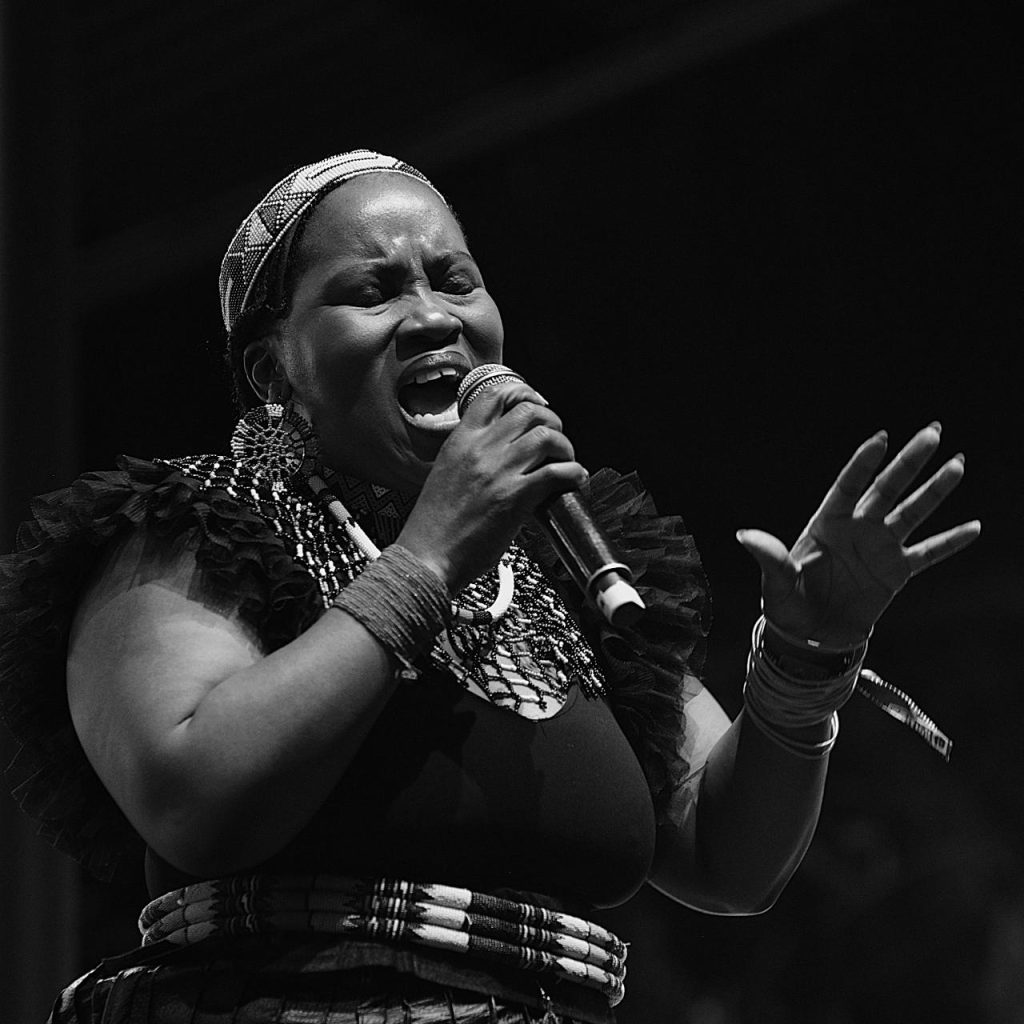
Xolisa Dlamini. Picture supplied
Xolisa is no stranger to the SBJOJ. This will be her third consecutive appearance as the first was when she was first featured as a guest artist by renowned guitarist Selaelo Selota in 2024, led her own ensemble in 2025, and is part of this historic tribute in 2026. She is quite honoured to perform at what she describes as one of the continent’s most respected platforms in celebrating excellence and musical heritage. “To be included in this year’s programme, and particularly paying tribute to Mam’ Busi Mhlongo is both humbling and exciting”, she told Jazz It Out.
She describes Busi Mhlongo as a trailblazer in the music industry whose contribution to African music continues to inspire artists around the world. Together with Buhlebendalo and Zawadi, their goal is not to imitate her, but to honour her spirit through their own authentic voices. Xolisa remembers Busi as a fearless creative. “She trusted her instincts and never compromised her identity to fit trends. She understood who she was and what she wanted to communicate through her music”, she said.
“As an individual, she was warm, generous, and deeply rooted in her culture. There was a quiet confidence about her. She carried herself with dignity, was easy to approach, and always willing to share her knowledge with younger artists”, she explained. Being around Busi was an inspiration and an opportunity to learn something new. Xolisa’s biggest lesson was authenticity. “Mam’Busi taught us that our roots are our strength. She showed us that you don’t have to compromise your craft and identity to be accepted”, she added.
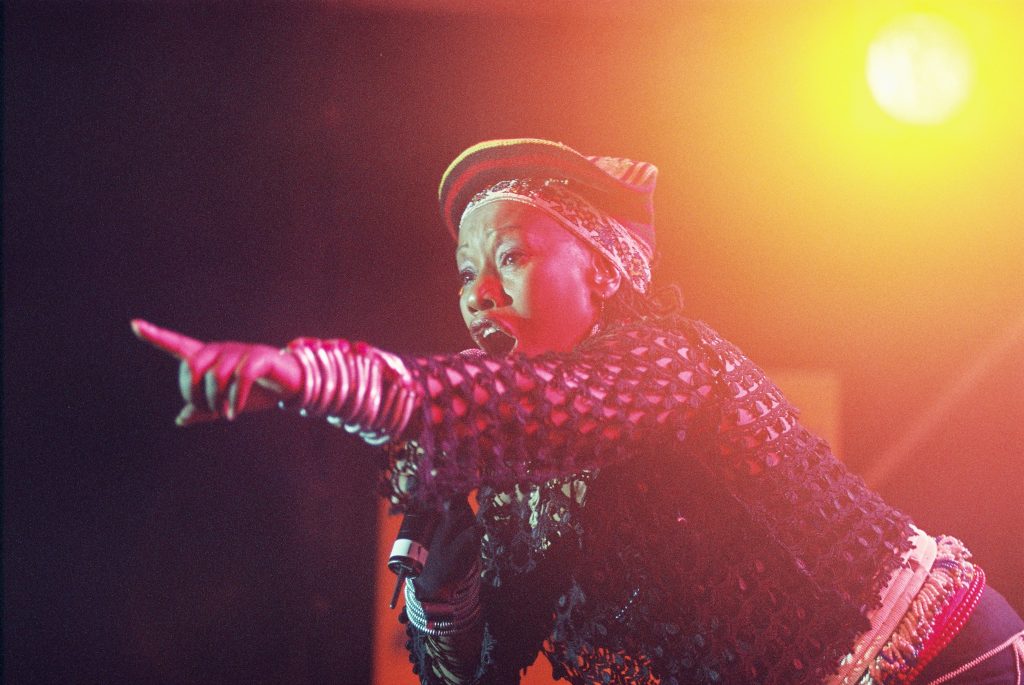
The icon who taught Xolisa a lot of music lessons. Picture supplied
Xolisa also learnt discipline, excellence, and the importance of storytelling. Every song she sang carried a message. She taught her that music is not just about technique, but also about communicating truth, culture, and emotion. “One thing Mam’Busi taught me that I will never forget was how to draw inspiration from nature. She would use examples from the wind, birds, and the sounds around us to discover different colours and textures in our voices”, showing how grateful she is about having crossed paths with the icon. She realized that singing is not just about notes, but also about connecting to life, emotion, and the universe.
Whenever the name Busi Mhlongo is mentioned, three things come to Xolisa’s mind – fearlessness, authenticity, and African excellence. She remembers a woman who proudly carried South African culture to international stages. She remembers innovation, spiritual depth, and artistic courage. “Most importantly, I remember someone who proved that African stories are an integral part of a global conversation”, she said.
The music her heroine recorded has an influence on her own music that she also records and performs. “Absolutely. Perhaps not always in a direct musical sense, but definitely in philosophy and approach. She taught us the value of being rooted in our identity and allowing our culture to inform our creativity”, she said. As an artist and a worshipper, she is deeply inspired by the way Busi carried honesty, spirit, and purpose into her performances.
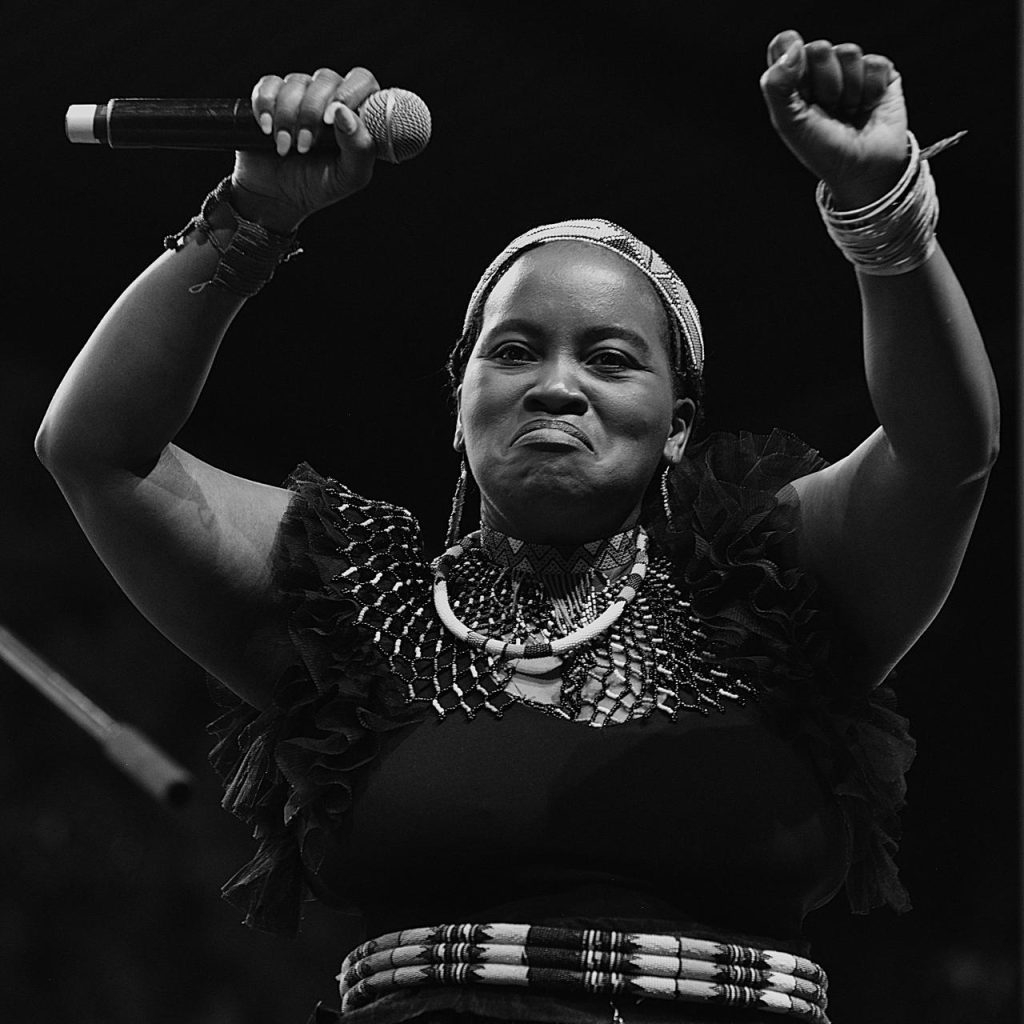
A great vocalist and live performer. Picture supplied
Why does Xolisa think Busi’s music still resonates with audiences 16 years after her passing: “Because it was truthful. Music that comes from a genuine place never expires. Mam’Busi’s music spoke about identity, belonging, spirituality, womanhood, and freedom. Even younger generations who may not have seen her perform can still connect with the honesty and power in her work. Great art transcends time.”
Their tribute as a trio is not simply a performance. It is an act of honouring a woman whose voice carried Africa to the world while remaining deeply tooted at home. “We are approaching this tribute with the greatest respect it deserves. Firstly, by honouring the music itself. Secondly, by bringing our own voices and experiences to it”, she said. Enthusiasts at the SBJOJ can expect a celebration of her life, her artistry, and her impact. “We want revellers to leave not only remembering the songs, but feeling connected to the spirit and legacy behind them”, she added.
Xolisa assures those attending the festival that it is going to be a powerful evening of music, storytelling, remembrance, and celebration as they honour one of South Africa’s most influential musical pioneers. “This is more than a tribute concert, it is an opportunity to reconnect with a legacy that continues to inspire artists and audiences across generations. We look forward to sharing this special experience at Mbira Stage on Friday 25 September with you”, she concluded.

0 thoughts on “Xolisa Dlamini is ready for the Busi Mhlongo tribute at Standard Bank Joy of Jazz Festival”
Comments are closed.