
Ike Phaahla has been a radio and television broadcaster for more than three decades. The media personality, communications specialist, film maker and producer is a dedicated family man, born again Christian and puts maximum effort in everything he does as a professional. He was born and raised in Naledi, Soweto, where he also attended school. “I was part of the student uprising in 1976”, he told Jazz It Out.
Like most of his peers, he was an avid radio listener since childhood. His inspiration came from the likes of Cyril Bongani ‘Kansas City’ Mchunu, Daniel Teboho Koekoe, and Hlapane Masitenyane. As time went on, that list grew longer to include Modisane Modise, Thuli Moagi, Mogale Mafatshe and Aubrey Motloung. Before his voice graced the airways, he was employed as a supervisor at Wilge Plaza. “We were the first team to open it to the public”, he recalls.
His journey to be part of the medium often referred to as ‘theatre of the mind’ was a very interesting one. He wanted to be on radio since 1980. “I became a thorn on the side of the Public Relations team at Radio 702. I frequented their studios, interacted with their hosts, and requested an audition”, he said. This was when the station was playing mainly Pop and Rock before changing its format to talk radio. Unfortunately, he was not successful. That experience did not deter him from following his dreams.
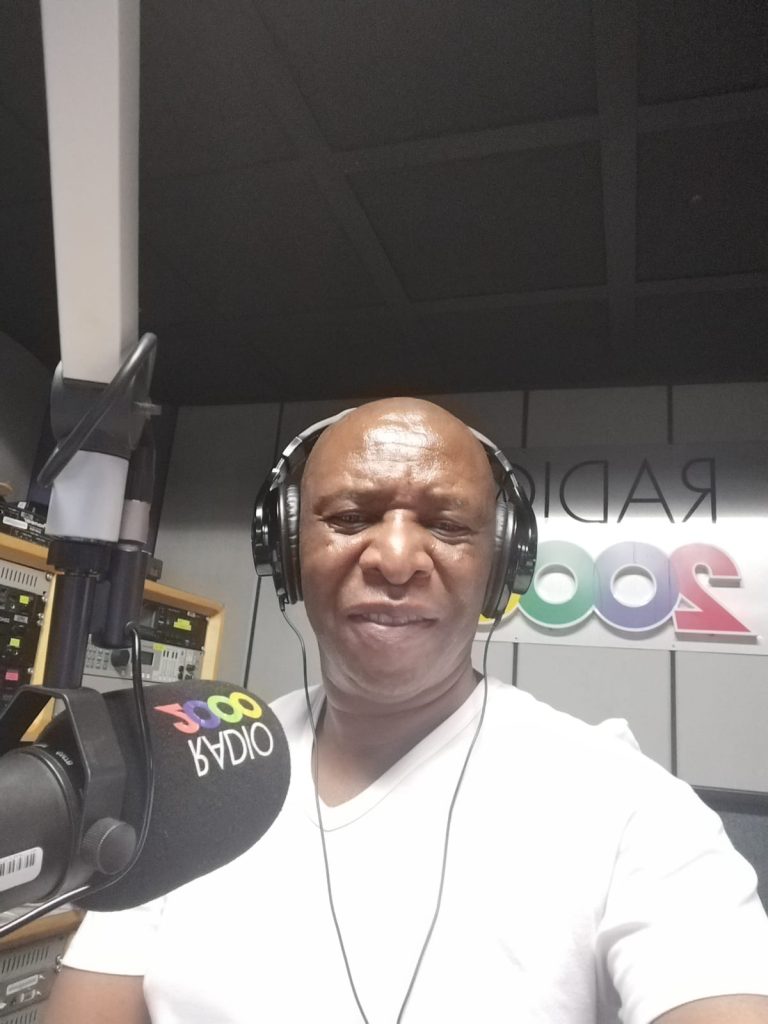
Ike Phaahla. Picture supplied
Ike then travelled to Mmabatho, where he did a great audition for Radio Bophuthatswana (also known as Radio Bop), but was rejected because he was not a MoTswana. “I came back, tried Capital Radio and Swazi Radio, but decided to give it all up as life responsibilities drove me to seek ways of earning a living”, he said. One day in 1990, he saw an advert in The Star which invited people who wanted a career in radio to enroll at the School of Broadcasting founded by Malcolm Russell. He did not waste time in applying.
At the institution, he met industry giants like Charlotte Lavine, Dorianne Berry, Stan Katz and Koos Radebe. Upon completion, he auditioned at Radio Metro (now Metro FM), waited for six months before receiving a call from the station to meet its manager, Koos Radebe. “He first commended me on the audition tape, offered me a news reading slot, and a weekend graveyard shift as a training ground”, he said. Three months later, he was moved to “MidMorning Breeze”, weekdays between 09h00 and 12h00, as well as “Sugar and Spice” on Sundays between 15h00 and 18h00.
After legendary Mesh Mapetla left Metro FM, Ike was asked to take over the Jazz slot on Sundays as its presenter, and also began hosting “Talk on Metro”. He recalls how intimidated he was to replace Mapetla. “I had been listening to him for many years. I took the responsibility very seriously and looked at ways to enhance the listener’s experience”, he said. With the support of management, he invited artists to do live performances at M2 studios. “We had memorable performances from the likes of Sipho Gumede, Gloria Bosman, Paul Hanmer and Abdullah Ibrahim”, he added.
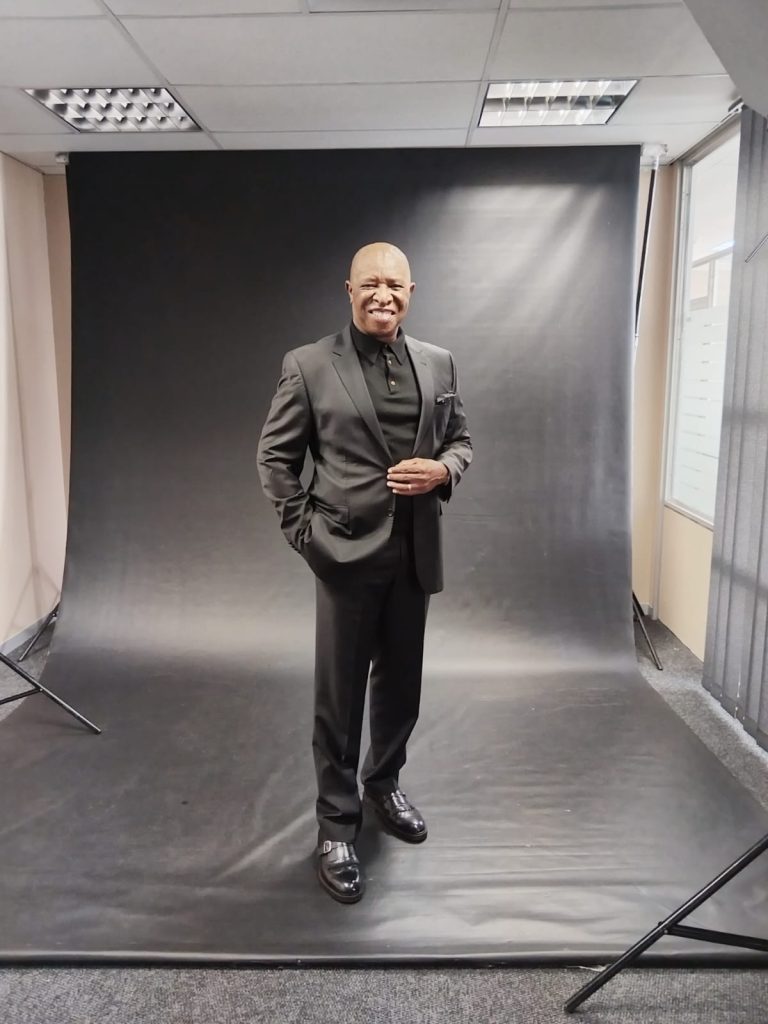
One of the many photoshoots he has done in his career. Picture supplied
During his tenure at Metro FM, he hosted a number of live outside broadcasts at North Sea International Jazz Festival Festival in The Hague, Netherlands. This was one of innovative ways they implemented to create and retain loyal listenership . He has fond memories of meeting artists including Michel Petrucciani, Carmen Lundy, Byron Wallen and seeing the Phil Collins Big Band performing live. This also made him realize how passionate Jazz aficionados are about the noble sound across the globe.
When Nothemba Madumo left SAfm as a Jazz presenter, Ike took over. While presenting “Best of Jazz” on weekends between 21h00 and 00h00, he was the anchor of “PM Live” between 16h00 and 18h00 on weekdays. His stay at SAfm saw him feature at the Standard Bank Joy of Jazz Festivals, hosted by T-Musicman as compere at their main stage, and facilitated their press conferences. He also went to host press briefings at the Cape Town International Jazz Festival. Furthermore, he travelled to Grahamstown (now Makhanda), where he became compere at The National Arts Festival and presented “Best of Jazz” to SAfm listeners.
He remembers how Standard Bank Joy of Jazz and Cape Town International were very small festivals when they started. “Many forget that Joy of Jazz began at State Theatre in Pretoria before Peter Tladi and his team moved it to the Market Theatre precinct and ultimately to Sandton Convention Centre”, he said. Similarly, the Cape Town International (formerly North Sea Jazz Festival Cape Town) was started by Rashid Lombard and his team at the Good Hope Centre before moving to Cape Town International Conventional Centre. His role in these festivals brought him closer to musicians, their management and other important role players.
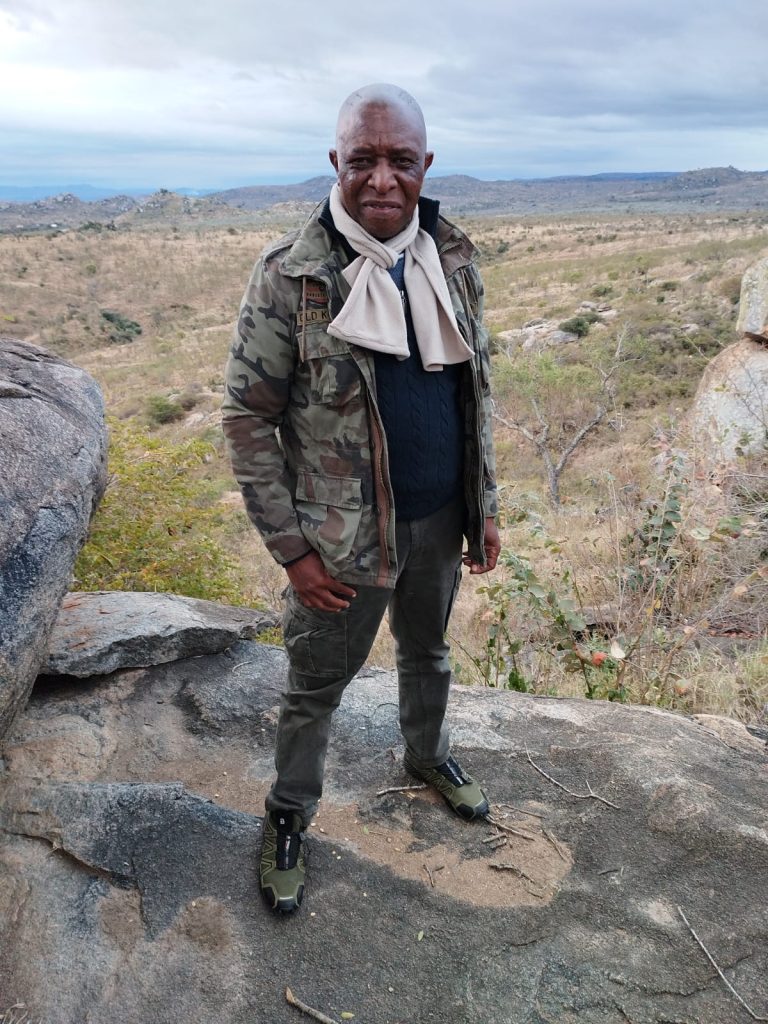
Enjoying life outdoors. Picture supplied
The legendary broadcaster emphasises the importance of good and strong relationships between broadcasters, writers and musicians as Jazz is marginalised in South Africa. Currently, there is hardly any Jazz television show on the public broadcaster which often creates a wrong impression that the genre is consumed by the elite. Some South African Jazz artists are revered more overseas than in the country of their birth because they lack media exposure that will earn them recognition they deserve.
In 2007, Ike and his associates that are passionate about the growth of Jazz registered a Non-Profit Organization (NPO) to record, film and document South African Jazz Legends. There were quite a number of musicians whom he believed had a story to tell. Unfortunately, by the time they secured the funds in 2014, some had already departed this world. But they have secured the music of Feya Faku, Marcus Wyatt, Andile Yenana and Ngenekhaya Mahlangu.
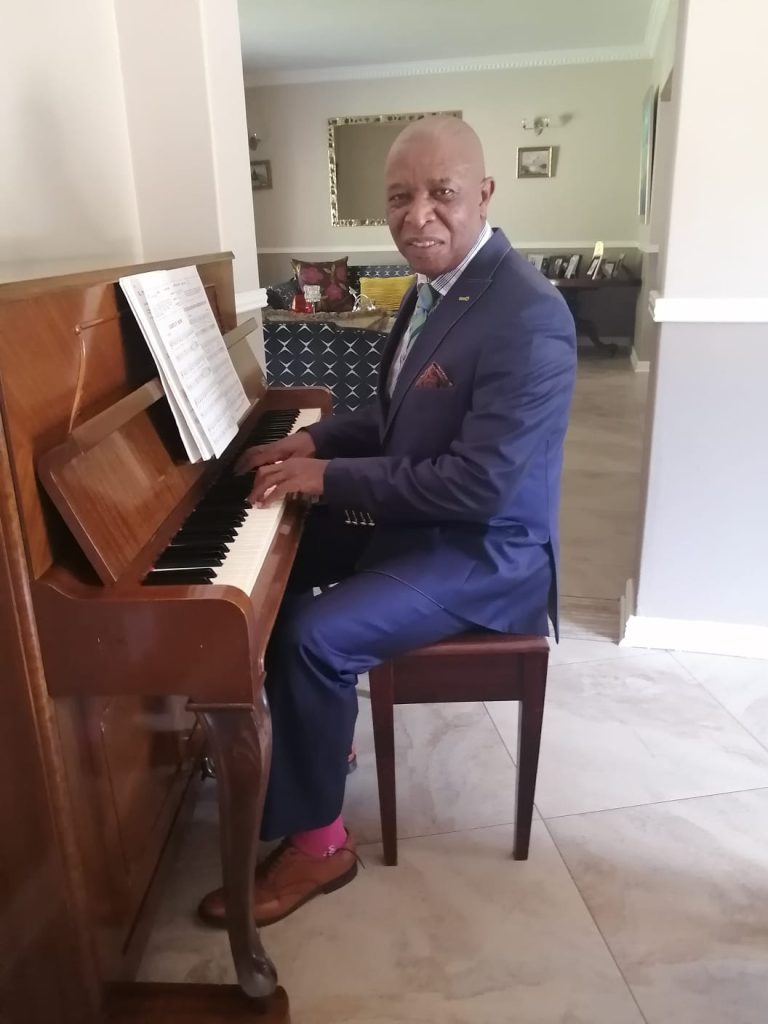
Hard at practicing the ivory keys. Picture supplied
Ike firmly believes that Jazz aficionados deserve to hear more Jazz on radio. “It is up to the artists to mobilize and demand equal airtime on radio and television, especially from the public broadcaster”, he asserted. The Jazz fraternity needs to support live performances, encourage business owners to open up their venues to artists so that they have an outlet to express themselves. Even though his current radio slot is predominantly Soul and RnB, Jazz still makes it to the lineup. “We must push the boundaries to make listeners appreciate other forms of music”, he added.
He attributes his longevity to grace and love from listeners. For broadcasters to have a good career, his advice is that they must have humility, learn and respect. “It is not about you but your audience”, he said. The icon is trying to recreate himself. “I am studying piano, contrabass and percussions while pursuing my entrepreneurial endeavours”, he concluded. Catch him on “The Retrospective”, Radio 2000, on Sundays from 19h00 till 22h00.
0 thoughts on “Legendary Ike Phaahla attributes his longevity to grace and love from listeners”
Comments are closed.